 Skip to content





















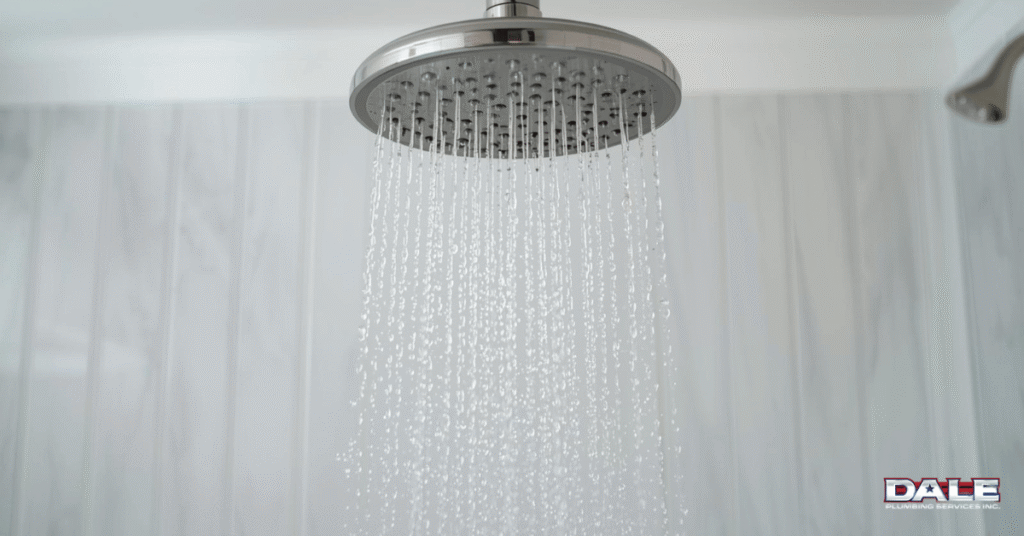
There’s nothing quite as frustrating as stepping into the shower only to be greeted by a weak trickle instead of a refreshing spray. Low water pressure affects nearly every daily activity that involves water, from washing dishes to doing laundry.
How To Fix Low Water Pressure
The good news? Many common causes of low water pressure can be fixed without breaking the bank. Some issues you can tackle yourself with basic tools, while others require professional help. Understanding what’s causing your water pressure problem is the first step toward getting your water flow properly restored.
Understanding Water Pressure Basics
Most residential homes operate best with water pressure between 40 and 60 PSI (pounds per square inch). Anything below this pressure range typically feels weak and unsatisfying. Pressure is measured in pounds per square inch to help determine if your home has low water pressure.
Here’s a simple test to narrow down your pressure issue:
- Turn on multiple faucets in your home at the same time
- If every fixture has weak flow, you have a whole-house pressure issue
- If only one or two fixtures are affected, the problem is isolated to those specific areas
- Compare hot and cold water flow to identify whether it’s a water heater problem
Check Your Main Water Shut-Off Valve
A partially closed main water valve is surprisingly common and incredibly easy to fix. The main water supply valve controls all water coming into your home, and if it’s not fully open, it restricts water flow to every fixture.
You’ll typically find this water valve near your water meter or where the main water line enters your house. It might be in the basement, crawlspace, or utility closet. The valve should be turned completely counterclockwise to the fully open position to ensure good water pressure throughout the house.
Inspect the Pressure Regulator
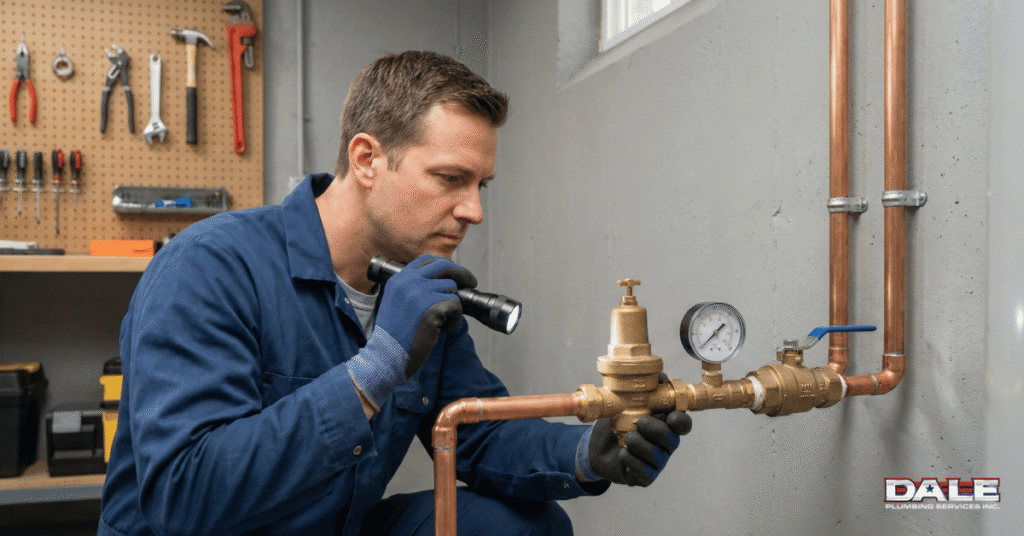
Many homes have a pressure reducing valve installed where the main water line enters the house. This bell-shaped device protects your water system from excessively high water pressure from the municipal water supply.
Signs your pressure regulator needs repair or replacement:
- Sudden drop in water pressure in the house
- Inconsistent pressure and flow that varies significantly from day to day
- Banging or hammering sounds in your pipes
- Pressure throughout your home that’s either too high or too low at all fixtures
Pressure regulators don’t last forever. Most need replacement every 10 to 15 years. While you can sometimes adjust the pressure regulator yourself by adjusting the pressure screw, installation of a new unit typically requires a licensed plumber from Dale Plumbing Services Inc. with the right tools and expertise.
Clean or Replace Clogged Aerators
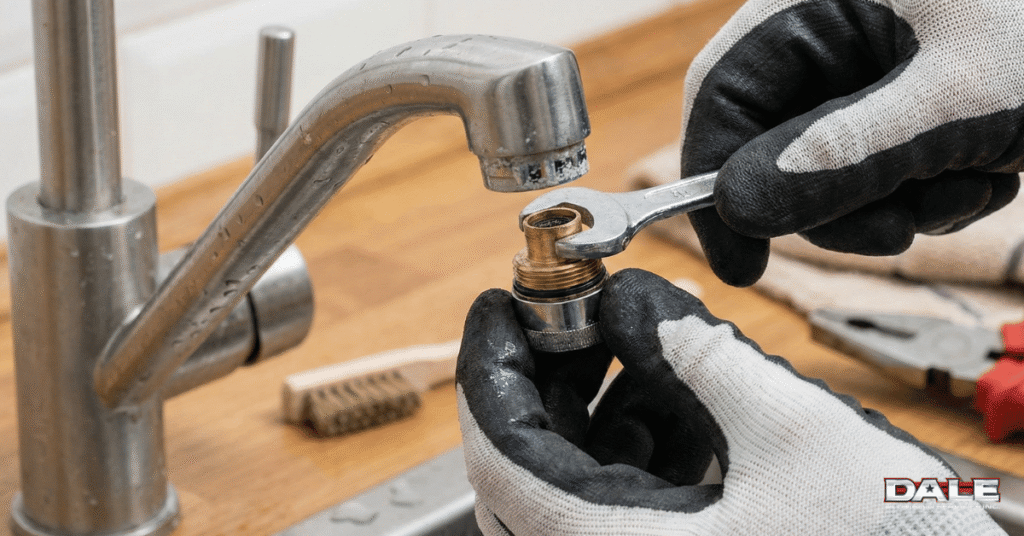
If you’re experiencing low water pressure at just one or two faucets in your home, clogged aerators are probably the culprit. These small screens screw onto the end of your faucet spouts and collect mineral deposits, sediment, and debris over time, especially in areas with hard water.
How to perform cleaning on aerators:
- Unscrew the aerator from the faucet (use pliers wrapped with cloth)
- Rinse it under running water to remove loose debris
- Soak it in white vinegar for a few hours to dissolve mineral buildup
- Rinse again and screw it back on
Showerheads work the same way. If your shower has low flow, remove the showerhead and give it the same vinegar treatment. This simple cleaning can dramatically improve your water pressure.
Address Corroded or Clogged Pipes
If your home was built several decades ago and still has the original plumbing, corroded pipes in your home might be strangling your water pressure and flow. This is especially common in houses with galvanized steel pipes that develop mineral buildup from hard water.
As corrosion builds up inside the pipes, it narrows the passage for the flow of water. You might also notice rusty or discolored water, a metallic taste affecting water quality, or visible corrosion on exposed pipes. Unfortunately, there’s no DIY fix for corroded pipes. Dale Plumbing Services Inc. can assess the extent of the problem and recommend solutions like repair or complete installation of new piping.
Fix Leaking Pipes
Hidden leaks are sneaky water pressure thieves. When water escapes through a leak before reaching your fixtures, it reduces the overall pressure throughout your home and impacts water distribution to the whole house.
Common signs of hidden leaks:
- Unexplained spikes in your water bill
- Water stains on ceilings, walls, or floors
- Musty odors or visible mold growth
- Sound of running water when all faucets are off
- Wet spots near the water main or foundation
Professional plumbers use specialized equipment like sewer camera inspections to locate leaks without tearing up your property. Finding and fixing leaks quickly not only restores low water pressure but also prevents expensive water damage to your whole home.
Check Your Water Heater
Here’s an interesting diagnostic clue for diagnosing low water pressure: if you have weak hot water heater flow but your cold water flows fine, this points to an issue specific to your hot and cold water system rather than your overall plumbing.
Sediment buildup inside the water tank is a frequent offender. Regular water heater maintenance, including flushing the hot water heater annually, prevents this buildup and keeps water coming properly. Also check that the shut-off valve on your water heater is fully open to ensure proper pressure coming from the unit.
Consider a Water Pressure Booster
For homes that consistently struggle with adequate pressure due to their location or municipal water supply limitations, a water pressure booster pump might be the best solution to low water pressure. These systems automatically increase pressure to maintain consistent water flow throughout your home.
Best situations for pressure boosters:
- Homes on hills or elevated areas with pressure due to their location
- Properties at the end of long water service lines
- Areas where the water supplier provides marginal pressure
- Well or city water systems that can’t deliver higher pressure naturally
Professional installation is necessary because the system needs to be properly sized for your home’s water needs. Dale Plumbing Services Inc. can evaluate whether a booster makes sense for your situation and handle the complete installation.
When to Call Dale Plumbing Services Inc.
Some low water pressure problems are perfect weekend DIY projects. Cleaning aerators, checking valves, and doing basic troubleshooting don’t require special skills. But other issues definitely call for professional expertise and repair services.
You should contact Dale Plumbing Services Inc. when you’ve tried simple fixes without success, when the cause of the low pressure isn’t obvious, or when you suspect problems with your water main or water source. Our licensed and insured team has diagnostic tools like pressure gauges and inspection cameras that pinpoint pressure problems quickly and identify what causes low water pressure in your house.
Conclusion
Low water pressure issues don’t have to be something you just live with. Start with the simple checks like valves and aerators, which take just minutes and solve the problem more often than you’d think.
The key is addressing water pressure problems rather than ignoring them. Beyond the daily inconvenience, low pressure can signal underlying issues that get worse over time. For persistent problems with water pressure in a house in Tewksbury, MA, Dale Plumbing Services Inc. provides expert diagnosis and reliable solutions to low water pressure with fast response times and fair pricing for all cleaning, repair, and installation services.


