 Skip to content






















Pipe relining puts a new resin liner inside your old pipe without digging a trench. Pipe replacement removes the damaged pipe and puts in new pipe. Relining fits pipes that are cracked, leaking or root-damaged but still hold their shape. Replacement is the right call when a pipe has collapsed, sagged or is the wrong size. A camera inspection tells you which one you have, and our pipe replacement services page explains the dig side of the job.
Both methods work. The wrong one costs you money twice. This guide walks Massachusetts homeowners through how each method works, what each one costs you in time and disruption, and how to tell which one your pipe needs. Questions now? Call Dale Plumbing Services Inc. at (781) 854-2969.
Key Takeaways
- Relining builds a pipe inside a pipe. A resin-soaked liner is pushed into the old line and hardened in place.
- Replacement digs out the old pipe and installs new PVC or cast iron.
- A camera inspection comes first. No honest plumber should quote either method without seeing inside the line.
- Relining needs a pipe that still holds its shape. Collapsed or badly sagging pipe usually has to be replaced.
- Lined pipe has a slightly smaller opening, which matters on small diameter lines.

How Pipe Relining Works
The trade name for most relining is cured-in-place pipe, or CIPP. The process follows the same basic steps on almost every job.
- Camera inspection. The line is filmed end to end to find every crack, root and joint problem.
- Cleaning. Roots, scale and grease are cut out with a drain machine or water jetting so the liner can bond.
- Measuring. The exact length and diameter are taken from the camera footage.
- Wetting the liner. A felt or fiberglass tube is soaked in epoxy or resin on site.
- Installing. The liner is pulled or blown into the old pipe through a cleanout or small access pit.
- Curing. Hot water, steam or UV light hardens the resin into a smooth new pipe.
- Reopening branches and filming again. Any side connections are cut open and the finished line is filmed to confirm the result.
A finished liner has no joints for roots to grow through. That is one of its biggest benefits in older neighborhoods with mature trees.
How long does a liner last?
Engineers design CIPP liners for a long service life. The Iowa Statewide Urban Design and Specifications manual, a public engineering guide, notes that the service life of CIPP is generally accepted to be 50 years. That figure is a design target, not a guarantee, and real life depends on how well the old pipe was cleaned and how the liner was installed.
How Pipe Replacement Works
Traditional replacement means opening the ground or the basement floor, removing the failed section and installing new pipe.
- Outdoor sewer lines are dug with an excavator or by hand along the pipe route.
- Under-slab drain lines mean cutting and breaking the basement floor, then patching the concrete.
- Inside water and drain lines are opened through walls and ceilings.
- New pipe is usually PVC for drains and sewers, or copper and PEX for water supply.
Replacement takes more time and makes more mess. In return, you get brand new pipe at full size, with correct slope, and you can fix problems that relining cannot.
Relining vs Replacement Side by Side
| Factor | Pipe Relining (CIPP) | Pipe Replacement |
|---|---|---|
| Digging | Little or none | Full trench or floor cut |
| Typical job time | Often one day for a short run | One to several days |
| Yard, driveway or floor damage | Minimal | Significant, plus restoration |
| Fixes cracks and leaks | Yes | Yes |
| Stops root intrusion | Yes, no joints left | Yes, with new sealed joints |
| Fixes a collapsed pipe | No | Yes |
| Fixes a sag or belly | No, the liner follows the sag | Yes |
| Pipe size after work | Slightly smaller | Full size or larger |
| Works on bends | Some bends, depends on liner | Any layout |
When Relining Is the Better Choice
Relining is usually the better fit when the pipe still holds its shape and the damage is spread along the line.
- Cracked cast iron under a finished basement floor you do not want to break up.
- Root intrusion at clay pipe joints under a lawn, driveway or mature trees.
- Pinhole leaks along a long run where spot repairs would never end. If you are not sure where water is escaping, start with leak detection and repair.
- Lines under patios, walkways or landscaping that would be expensive to restore.
- Pipes with good slope that only need a new inner wall.
Tree roots are one of the main reasons sewer lines fail. The U.S. EPA’s sewer overflow FAQ lists roots entering through defects and openings as a common cause of blockages, along with grease and wipes. A lined pipe gives roots no joint to get in through.
When Replacement Is the Better Choice
Some pipe problems cannot be fixed from the inside. In these cases, replacement is the only lasting repair.
- Collapsed pipe. If the pipe has caved in, there is nothing for a liner to follow.
- Bellies or sags. Waste water pools in a low spot. A liner follows the same sag and the problem stays.
- Orangeburg pipe. This tar paper pipe, used in some homes built in the 1950s and 1960s, deforms with age and is a poor host for a liner.
- Undersized pipe. A liner makes the inside smaller, which is a problem if the pipe was already too small.
- Major layout changes. A remodel that moves fixtures needs new pipe in new places.
If you are not sure which kind of damage you have, our write-up on what a Tewksbury sewer camera inspection finds shows the kinds of defects that decide this question.

Questions to Ask Before You Choose
Before you sign off on either method, ask the plumber these questions. A good one will answer every one of them clearly.
- Can I see the camera footage? You should see the damage with your own eyes.
- Is the pipe holding its shape along the whole run? If not, relining may not hold up.
- Is there a belly anywhere in the line? Ask where, and how deep.
- What is the inside diameter after lining? Make sure it still meets your home’s needs.
- Who handles the permit? Sewer and drain work in Massachusetts generally needs a licensed plumber and a permit.
- What warranty comes with the work? Get it in writing.
- What happens to my yard, floor or driveway? Know who restores it and what it costs.
Massachusetts plumbing work is covered by the Uniform State Plumbing Code, which sets the rules for drain materials, slope and testing. Your plumber should follow it whether they line or replace.
Want a straight answer on your own pipe? Call (781) 854-2969. We will camera the line and show you what we see before we talk about price.
What About Cost?
Cost depends on the length of the run, the pipe size, how deep it is buried, and what sits on top of it. A short, shallow run under grass is very different from a long run under a driveway and a finished basement.
| Cost Factor | Raises Relining Cost | Raises Replacement Cost |
|---|---|---|
| Long pipe run | Yes, more liner and resin | Yes, more digging and pipe |
| Deep pipe | Slightly | Yes, much more digging |
| Pavement, patio or finished floor above | No | Yes, plus restoration |
| Many bends or branch connections | Yes, more reinstatement work | Slightly |
| Collapsed or sagging sections | Not suitable | Standard repair |
We give you a written, upfront price before any work begins, and our plumbing financing options can help spread the cost of a larger sewer or drain job.
Pipe Relining Questions
Is pipe relining as good as replacement?
For pipes that still hold their shape, relining can last as long as new pipe and avoids digging. It is not as good when the pipe has collapsed, sags or is too small. In those cases, only replacement fixes the root cause. A camera inspection decides which one applies.
How long does pipe relining last?
Engineering guides commonly use a 50 year design life for cured-in-place pipe liners. Real life depends on how well the old pipe was cleaned, the liner quality and the installation. Ask for the warranty in writing and for camera footage after the work is done.
Can you reline a pipe with a belly in it?
No, not as a true fix. A liner follows the shape of the old pipe, so a sag stays a sag. Waste water will keep pooling in the low spot. That section usually needs to be dug up and replaced with new pipe at the correct slope.
Does relining work on cast iron pipe?
Yes. Cast iron drain and sewer lines are some of the most common candidates for relining. The pipe must first be cleaned of scale and rust so the liner bonds well. If the cast iron has rotted through or collapsed, those sections need replacement first.
Find Out What Your Pipe Actually Needs
The only way to choose between relining and replacement is to see inside the pipe. Call Dale Plumbing Services Inc. at (781) 854-2969 and ask for a sewer camera inspection. We will show you the footage, explain what it means, and give you an upfront price on the repair that fits your pipe. We answer calls 24/7 for backups and leaks.
We serve Tewksbury, Billerica, Wilmington, Andover, North Andover, Woburn, Burlington, Reading, North Reading, Lexington, Wakefield, Melrose, Stoneham, Bedford, Carlisle and nearby areas.
Dale Plumbing Services Inc.
1501 Main St #43, Tewksbury, MA 01876
Phone: (781) 854-2969
Email: info@daleplumbingservices.com
Hours: Open 24/7
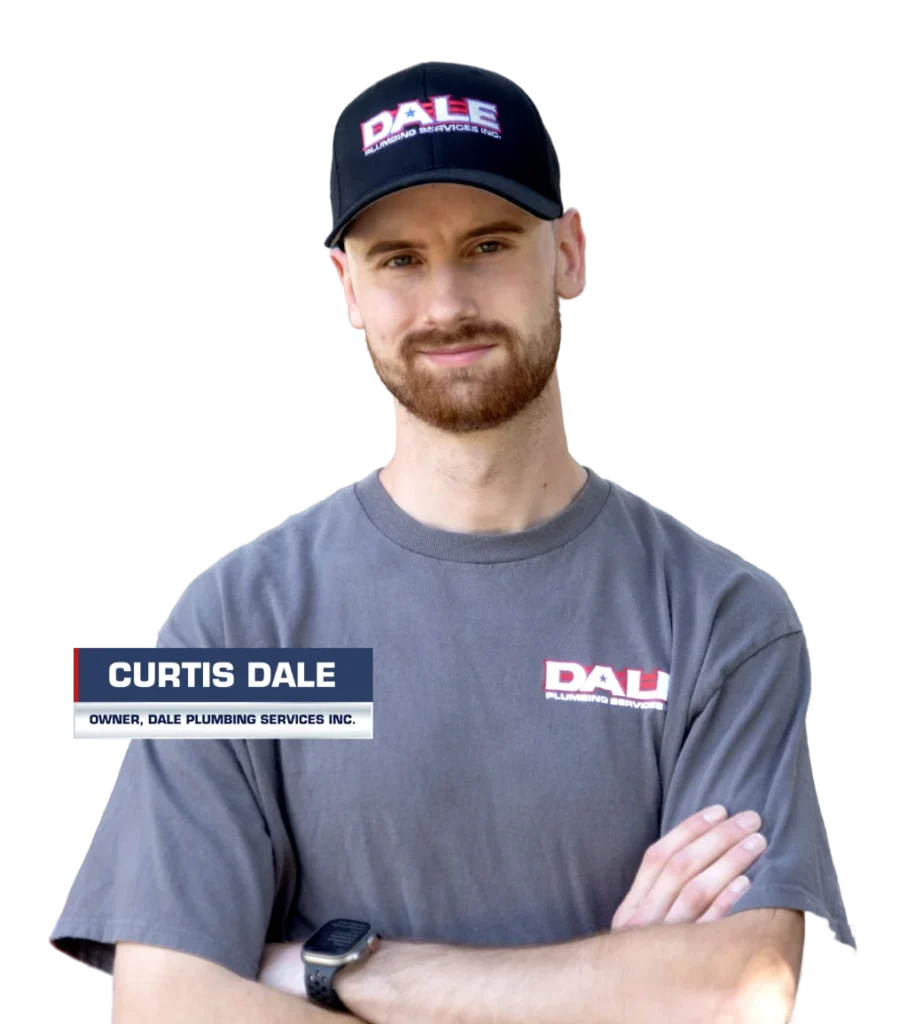
Owner: Curtis Dale, Master Plumber, MA License #4744


