 Skip to content




















If you live outside city limits in Tewksbury, MA, your home probably relies on a septic system instead of public sewer systems. About 20% of American households depend on these wastewater treatment systems to handle their household waste right on their property.
Understanding how does a septic tank works helps you maintain it properly and avoid expensive repairs. Dale Plumbing Services Inc. helps Tewksbury homeowners keep their plumbing running smoothly with expert installation, repair, and cleaning services.
What Is a Septic System?
A septic tank is an underground watertight container that receives all your household wastewater. It works like your home’s personal wastewater treatment system, using natural processes and soil absorption to clean liquid waste before it returns to the groundwater.
Most residential septic tanks hold between 750 and 1,500 gallons and are made of concrete, fiberglass, or polyethylene. These disposal systems work quietly for decades when properly maintained.
Components of a Septic System
Every conventional septic system has three essential parts working together:
- The septic tank: A watertight container with a first chamber where solids settle and treatment begins
- The drain field (also called leach field or drainfield): Perforated pipes buried in gravel that distribute treated liquid across soil
- The soil: Acts as a natural filter where beneficial bacteria remove pathogens and contaminants
How Does a Septic Tank Work?
Wastewater Enters the Tank
All drains in your home connect to one main pipe leading to your septic tank. Gravity pulls wastewater through the inlet pipe every time you flush a toilet, shower, or run the dishwasher. Dale Plumbing Services Inc. ensures proper pipe installation to prevent clogs and drainage issues.
Inside the Tank: Separation Process
Once wastewater enters the tank, it naturally begins to separate into three layers. Heavy solids sink to the bottom forming sludge, while oils and grease floats to the top creating scum. The middle effluent layer remains relatively clear liquid.
Anaerobic bacteria in the tank break down organic matter in the sludge and scum layers. This natural process reduces solid volume, though it can’t eliminate everything. That’s why tanks need pumping every three to five years.
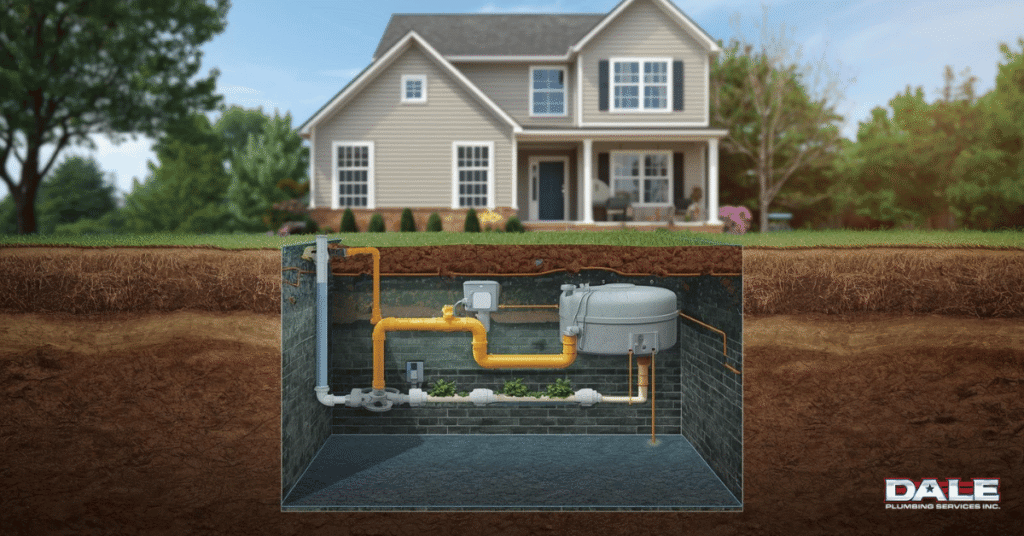
How Conventional Septic System Works
The T-shaped outlet pipe only allows the middle liquid layer to exit toward the drain field. This prevents solids from entering the drainage system. A distribution box often divides the flow evenly among multiple drain pipes to prevent overflow in any single area.
Final Treatment in the Septic Drain Field
The perforated pipes slowly discharge treated liquid into the gravel bed. As septic tank effluent percolates into the soil, billions of microorganisms provide secondary treatment by removing harmful bacteria and excess nitrogen. By the time the liquid waste reaches the water table, it’s been naturally purified through soil absorption.
Some new septic systems use aerobic treatment instead of traditional anaerobic processes. Aerobic systems inject oxygen to speed up breakdown of organic matter, though conventional septic systems remain most common for homeowners.
Signs Your Septic Tank Needs Attention
Watch for these warning signs that indicate your system needs repair or cleaning:
- Slow drains throughout multiple rooms or persistent clogs
- Gurgling sounds from toilets or drain pipes
- Sewage odors near the tank or leach field
- Standing water or soggy patches in your yard
- Unusually green grass over the drainage field
- Sewage backups in your home
Dale Plumbing Services Inc. can diagnose plumbing issues that might stress your wastewater systems. Sometimes what seems like septic failure is actually a fixable issue inside your home that our team can repair quickly.
Essential Maintenance for a Healthy Septic System
Pumping Schedule
Get your tank pumped every three to five years to remove accumulated sludge and scum. Larger families or smaller tanks need more frequent service. Regular pumping prevents solids from entering the drain field and causing expensive damage.
Water Conservation
Spread laundry loads throughout the week instead of one day. Fix leaky toilets and faucets promptly to avoid overwhelming your system with high water volume. Dale Plumbing Services Inc. offers leak detection and repair services to protect your installed septic system.
What Not to Flush
Never put these items down your drains:
- Grease, oils, or coffee grounds
- Feminine hygiene products or dental floss
- Medications or harsh chemicals that kill bacteria in the tank
- Cat litter or cigarette butts
- Paper towels or wipes labeled “flushable”

Protect the Drainage Field
Never park vehicles over the leach field, as weight compacts soil and crushes pipes. Avoid planting trees nearby since roots can damage the system and create clogs in perforated pipes.
When to Call Dale Plumbing Services Inc.
Some situations require expert plumbing help from a licensed professional:
- Persistent backups or chronic clogs throughout your home
- Before buying a property with a septic system
- When planning remodels that add fixtures and increase wastewater
- For annual inspections to catch small problems early
- Installing new septic tanks or upgrading wastewater treatment systems
Dale Plumbing Services Inc. provides sewer camera inspections, leak repairs, cleaning services, and fixture installations for Tewksbury homeowners. Our licensed team understands how plumb systems interact with septic tanks and can prevent problems before they start.
The Bottom Line
Your septic system uses a simple but effective natural process to treat wastewater. Household liquid enters the tank, solids settle to the bottom while scum floats to the top, bacteria break down organic matter, then effluent exits the tank to the drain field where soil microbes finish purification. The entire process relies on gravity, biology, and proper septic system maintenance.
Regular cleaning, smart water use, and avoiding harmful materials down your drains keep the system working efficiently. A well-maintained conventional septic system can serve your home reliably for 20 to 30 years or longer.
Dale Plumbing Services Inc. supports Tewksbury residents with expert plumbing, heating, installation, repair, and cleaning services. Understanding how a septic tank works is an investment in your home’s value and your family’s comfort.


