 Skip to content



















Most Tewksbury homeowners can work their thermostat without any problem, but ask them whether they have a boiler or furnace and you’ll often get a blank stare.
It’s one of those things that doesn’t seem important until your heating system stops working in the middle of winter and you need to talk to a repair technician.Here’s the thing about boilers and furnaces. They both keep your home warm, but they work in completely different ways.
The Difference Between Boiler vs Furnace
One pushes hot air through vents while the other circulates hot water through pipes and radiators. Understanding which heating system you have helps you make smarter decisions about maintenance, repairs, cleaning, installation, and energy costs.
Dale Plumbing Services Inc. has handled installation, repair, and cleaning of both types of heating systems in Tewksbury homes since 2020. We’ve put together this guide to help you understand the real differences between these systems and figure out which one is working in your home right now.
What Is a Furnace and How Does a Furnace Heat Work?
A furnace is a forced air heating system that works like a giant hairdryer for your house. The furnace heats air and then uses a powerful blower motor to push that warm air through metal ducts that run throughout your home. A gas furnace is the most common type in Tewksbury, though you’ll still find oil-burning heaters in older properties.
The thermostat on your wall acts as the brain of the operation. When the temperature drops below your setting, it tells the furnace to fire up and deliver heat through your vent system. Most furnace heat air systems can also accommodate central air conditioning using the same ductwork, making them versatile for heating and cooling needs.
Key furnace components include:
- Burner assembly that creates heat
- Heat exchanger where air gets warmed
- Blower motor that distributes heat through ducts
- Furnace filters that clean circulating air
- Ductwork and vents throughout your home
What Is a Boiler and How Does Boiler Heat Work?
Despite the name, a modern boiler doesn’t actually boil water anymore. A boiler heats water to around 140-180 degrees and pumps it through a closed loop of pipes to radiators, baseboard units, or radiant floor systems. As the hot water flows through these heat emitters, it warms up your rooms. The boiler uses either hot water or steam to heat your home, though most newer systems rely on hot water.
Boilers and furnaces are both common in older Tewksbury homes and throughout New England. Many run on natural gas or heating oil, though high-efficiency models have become popular for energy-efficient heating. The boiler system delivers radiant heat that warms objects and people directly rather than just heating the air.
Main boiler system parts:
- Burner that heats the water
- Heat exchanger for energy transfer
- Circulator pump that moves water around
- Expansion tank that handles pressure changes
- Radiators or radiant floor heating units in each room
Boiler vs Furnace: Key Differences Between the Two Heating Systems
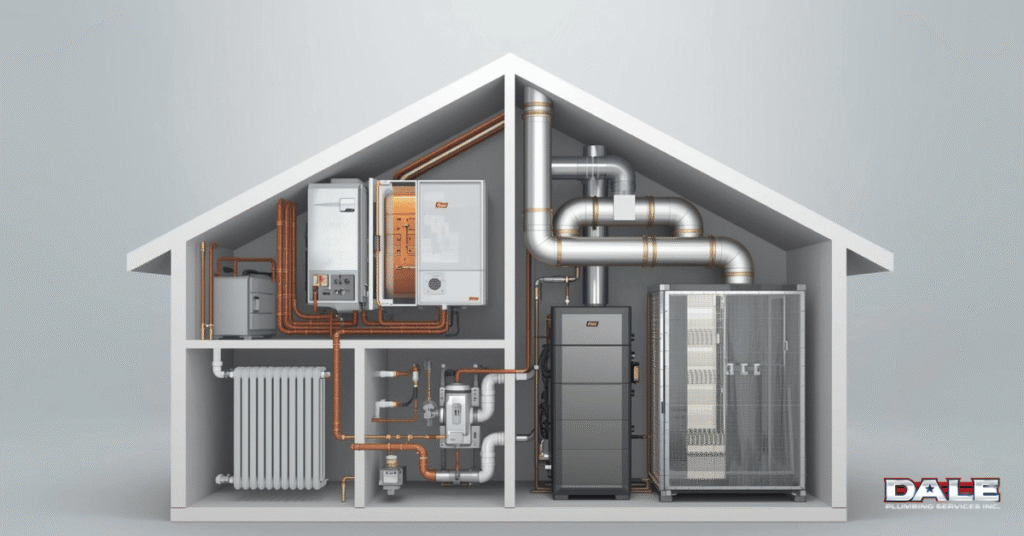
The biggest difference in the boiler vs furnace debate comes down to what actually moves through your house. A furnace heats air and pushes it through a duct system and out of vents. A boiler heats water and sends it through pipes and radiators or radiant floor systems with no air movement at all.
Furnaces heat homes faster because air moves quickly through ducts. You’ll notice the temperature climb within 15-20 minutes of the system kicking on. The boiler heat vs furnace heat comparison shows that boilers take longer to warm up your space, but they provide more even, consistent heat output that doesn’t fluctuate as much.
How boilers and furnaces impact your home differently:
- Furnace systems circulate dust and allergens through moving air
- A boiler and a furnace differ in air quality impact since boilers don’t move air
- A furnace may dry out your home in winter
- The boiler uses quiet operation compared to forced air systems
- Furnaces allow you to add an air conditioning system using the same ducts
- Boilers require a separate ductless system or central air conditioning for cooling
Energy Efficiency and Expected Lifespan
With proper maintenance, cleaning, and repair from Dale Plumbing Services Inc., boilers are generally more energy-efficient and typically outlast furnaces by a decent margin. A furnace or boiler decision often considers that furnaces generally last 15-20 years while boilers often run for 20-30 years or more. The boiler system has fewer moving parts than a furnace, which contributes to its longevity.
Your actual heating costs depend more on the specific model and fuel type rather than just the boiler or a furnace choice. Water holds heat better than air does, so less fuel to heat your home gets wasted with the boiler uses hot water approach. Heat loss through ductwork is a real issue with furnaces, especially if ducts run through unheated spaces. A high-efficiency furnace with proper annual fuel utilization efficiency ratings can help reduce this waste.
Comparing key features:
- Heat distribution: Furnace uses forced air to heat through ducts vs boiler uses water to heat your home through pipes
- Heating speed: Furnace heat works fast (15-20 minutes) vs boiler heat provides slower but consistent warmth
- Typical lifespan: Furnaces last 15-20 years vs boilers last 20-30 years
- Noise level: Moderate blower sound from furnace vs very quiet radiant heat from a boiler
- Can add AC: Furnace vs boiler shows furnaces easily accommodate cooling, boilers need separate systems
- Energy efficiency: Boilers distribute heat more efficiently with less energy than heating with forced air
How to Identify Your Heating System for Your Home
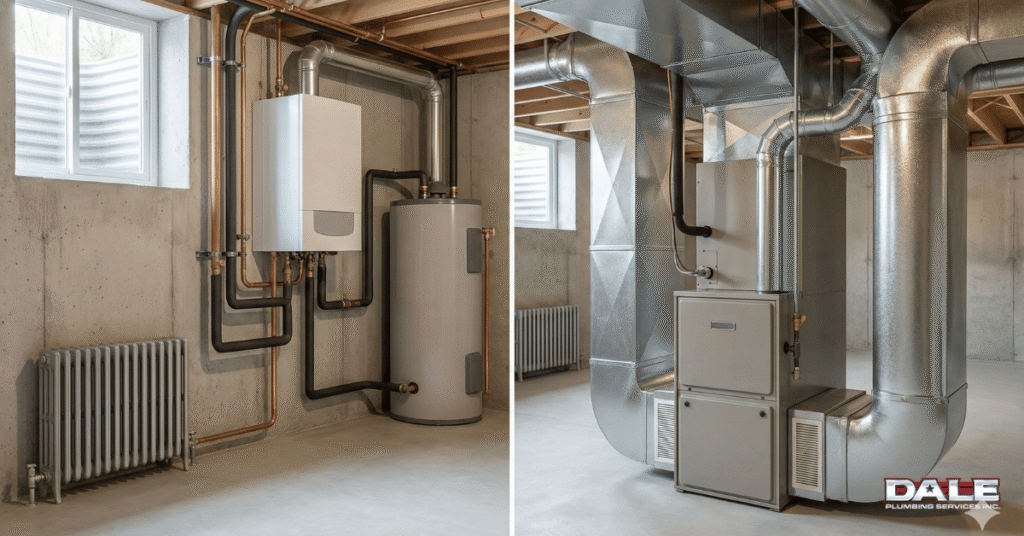
Walk through your home and look at the walls and floors. Do you see rectangular or circular vents that blow air? That means you have a furnace. If you see old-fashioned radiators or modern baseboard heaters running along the baseboards, you’ve got a boiler or a furnace with radiant floor heating.
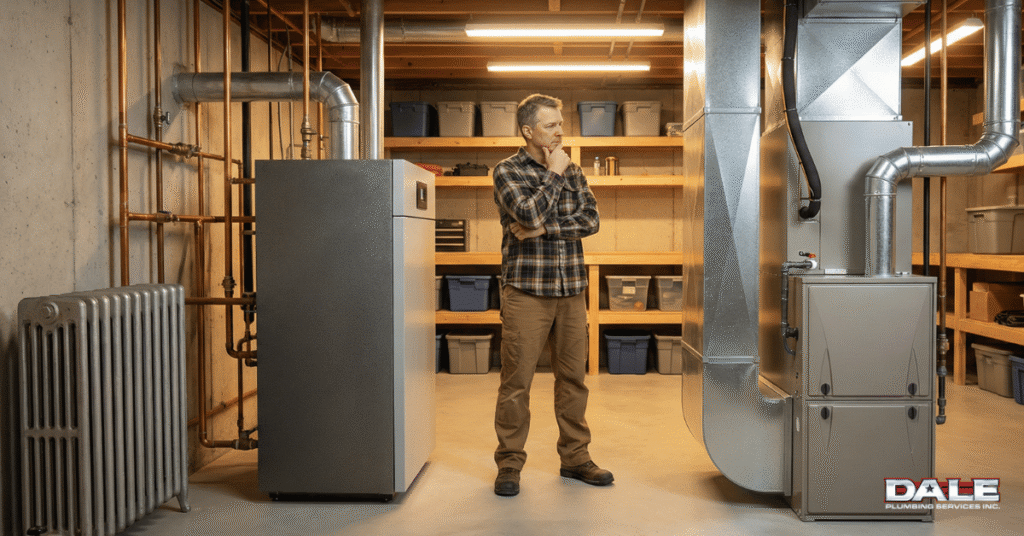
Head down to your basement or mechanical room. A furnace looks like a large metal cabinet with big metal ducts coming out of the top and sides. A boiler is more compact and cylindrical with pipes and radiators connections coming out instead of ducts.
Quick identification checklist:
- Vents in walls or floors indicate a furnace
- Radiators or radiant floor systems mean you have a boiler
- Whooshing air sounds come from furnaces
- Quiet operation points to a boiler heat system
- Large rectangular unit with ducts equals furnace
- Compact unit with pipes equals boiler
Choosing Between a Boiler and Furnace for Tewksbury Homes
There’s no universal answer to choosing the right heating system. Both heat your home effectively through cold Massachusetts winters. Furnaces are more affordable for initial installation, but the decision depends on what’s already installed in your home.
If your home heating system already exists, you’ll almost always stick with that type when replacement time comes. Converting from a boiler replacement to a furnace installation means adding ductwork throughout your entire house, which costs tens of thousands of dollars. Dale Plumbing Services Inc. can help you find the right solution and help you find the best for your home.
A furnace or boiler choice depends on priorities:
Furnaces work best when you want:
- Ability to add an air conditioning system
- Faster temperature changes
- Lower upfront installation costs
- Combined heating and cooling distribution
Boilers are better if you prefer:
- Quiet operation without blowing air sounds
- More even radiant heating systems without hot and cold spots
- Better conditions for family members with allergies
- Longer lifespan between replacements
- Energy-efficient heating system operation
Maintenance, Cleaning, Repair, and Installation Requirements
Whether you heat with a boiler or furnace, regular maintenance, cleaning, and repair prevent breakdowns and keep your home heating system running efficiently. Dale Plumbing Services Inc. recommends annual professional service before winter hits for both system types.
For furnace owners, the most important task is changing furnace filters every 1-3 months during heating season, or monthly or quarterly depending on usage. Clogged filters make your system may work harder and can lead to breakdowns.
Furnace maintenance tasks:
- Replace furnace filters monthly during winter
- Schedule annual professional tune-ups
- Keep vents and registers clear of obstructions
- Listen for unusual noises or smells
- Check for proper air to heat distribution
Boiler maintenance needs:
- Annual professional inspection, cleaning, and service
- Bleed radiators when air gets trapped inside
- Check pressure gauge regularly
- Watch for leaks around pipes and radiators or radiant connections
- Monitor heat output for consistent performance
When to Call Dale Plumbing Services Inc.
Watch for warning signs with either heating system. Strange noises, uneven heating, higher than normal fuel bills, or frequent cycling on and off all indicate problems that need professional repair attention. The sooner you address small issues, the less likely you’ll face an expensive emergency repair in the middle of January.
Dale Plumbing Services Inc. has been servicing, cleaning, and handling installation and repair of both boilers and furnaces for Tewksbury homeowners since 2020. Our licensed plumbers understand the unique challenges of different heating systems in New England homes and can handle everything from routine maintenance to major installation projects.
Understanding Your Home Heating System
Now you know the fundamental differences in the furnace vs boiler comparison. One furnace heats air and blows it around your house using a duct system, while the other boiler heats water and sends it through pipes to radiators or radiant floor heating units. The heat from a boiler system provides consistent comfort, while furnace heat offers faster temperature changes and easier integration with central air conditioning.
The heating system for your home right now is probably doing a fine job as long as you maintain it properly. Focus on annual professional service, regular cleaning, address problems quickly when they pop up, and your heating needs should be met for many years to come. Whether you need installation, repair, or help choosing between a boiler and furnace, contact Dale Plumbing Services Inc. and we’ll make sure your Tewksbury home stays warm all winter long.


